
Our team of experts offers regular updates on FPE and life safety best practices, code modifications and more.
December 12, 2025
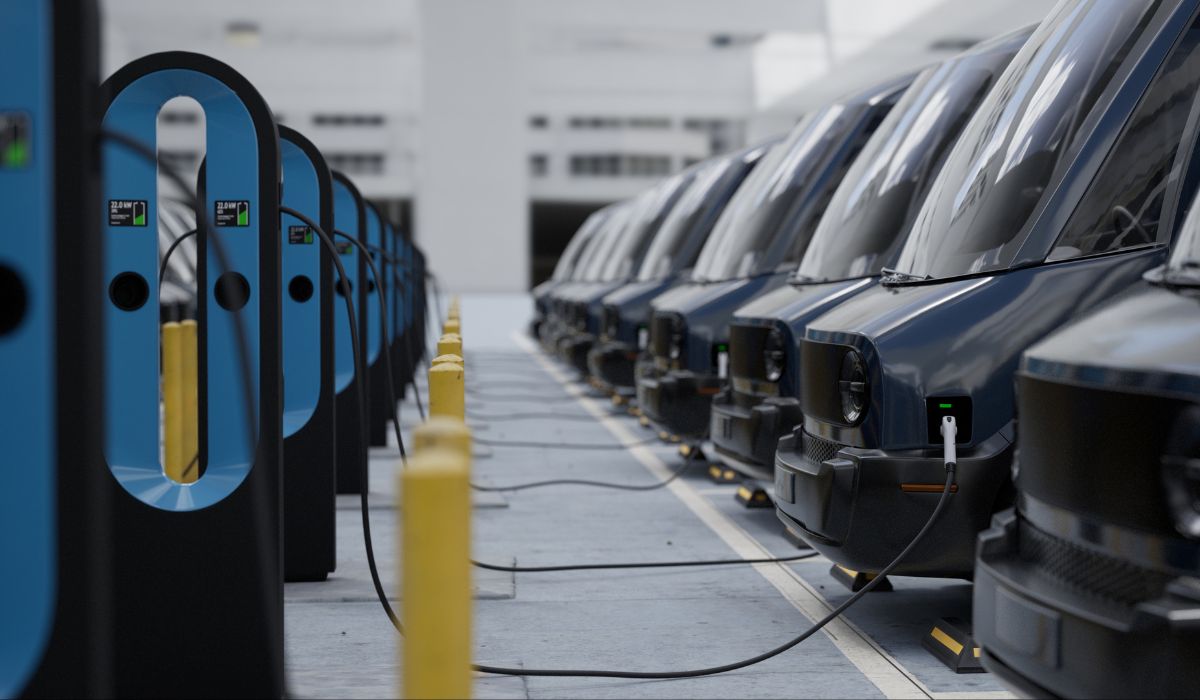
As the number of electric fleets grows, so do the questions surrounding safety risks. Learn how fire protection engineering enables operators to navigate this transition with confidence.
Fleet electrification is accelerating across the public and private sectors. Delivery companies, municipalities, and corporate fleets are adopting electric vehicles (EVs) to meet sustainability goals, reduce fuel costs, and comply with emerging regulations.
But as with any transformative technology, progress brings new challenges. The shift from combustion engines to high-voltage, lithium-ion–powered vehicles has introduced different types of fire and life safety risks that require a fresh engineering perspective.
Fire protection engineers are uniquely positioned to help operators navigate this new reality. Through careful analysis, performance-based design, and collaboration with code officials and electrical engineers, they ensure EV fleet facilities remain safe, compliant, and resilient without slowing the pace of innovation.
When EVs enter a fleet, the vehicles themselves become part of the facility’s energy ecosystem. Batteries that store hundreds of kilowatt-hours of power sit just a few feet apart in parking structures, depots, and charging yards. That energy density, paired with high voltage and amperage charging cycles and tightly packed spaces, creates potential fire scenarios that differ significantly from traditional fleets.
The greatest concern is thermal runaway, a chain reaction in which one battery cell overheats and triggers neighboring cells to do the same. Once this process begins, the temperature can rise rapidly, releasing flammable gases and heat that can challenge conventional suppression systems. Unlike gasoline fires, which often burn on the surface, battery fires can reignite hours or even days later if the remaining affected cells are not fully cooled or if stranded energy restarts the thermal runaway.
Charging infrastructure presents additional risks. High-power DC fast chargers generate heat during operation, and if connectors or cables are damaged, they can become ignition sources. Electrical faults, inadequate spacing, and poor ventilation can all compound the danger.
To be clear, none of these risks make EVs unsafe by definition. In fact, most EVs perform safely under normal use and charging conditions. But understanding the unique nature of these hazards is key to designing facilities that can prevent incidents and respond effectively when something does go wrong.
Fire protection engineers approach EV fleet safety the way they would any complex system: by identifying hazards, assessing risks, and designing layers of protection that work together to mitigate those risks.
One of the first steps is a fire hazard analysis (FHA). This process examines potential ignition sources, fire dynamics, and energy release scenarios within EV fleet operations. The analysis provides the foundation for tailored protection strategies, especially in cases where technology has outpaced existing prescriptive codes.
From there, engineers use performance-based design to develop solutions that align with the facility’s configuration and mission. Computational Fluid Dynamics (CFD) models and Fire Dynamics Simulator (FDS) analyses help predict how smoke, gas, or heat will behave in a confined garage or open-air charging yard. These insights inform the placement of sensors, suppression systems, and ventilation controls to ensure both personnel safety and property protection.
Early detection is another key area of focus. Because lithium-ion batteries can vent gases before flaming ignition occurs, systems that combine gas detection, heat sensing, and battery management system (BMS) data can alert operators long before a visible fire begins. Integrating these signals into the facility’s fire alarm system enables a coordinated response, such as shutting down chargers, activating ventilation, or isolating power circuits automatically.
Suppression selection is a nuanced decision. While water remains the most effective means of cooling overheated cells and suppressing the fire in surrounding ordinary combustibles, systems must be carefully designed to avoid electrical hazards and runoff issues.
Fleet operators are rethinking how they design and retrofit their facilities to accommodate electric vehicles. Fire protection engineers play a critical role in ensuring those designs balance efficiency with safety.
Outdoor charging depots present a different set of challenges. High-power chargers and electrical distribution systems must be protected from the elements. Separation distances between vehicles, chargers, and structures are often adjusted to reduce the risk of fire spread. Protective bollards, drainage design, separation from egress paths, and cable routing all become part of the overall fire protection plan.
Because codes are still evolving, engineers often reference multiple codes and standards as well as guidance from risk insurers.
Together, these form the basis for EV fleet fire safety, but each project typically requires interpretation and adaptation based on local authority requirements.
EV fleet safety does not end at the charger. Operations teams and emergency responders must also understand how to manage incidents that involve high-voltage systems and stored energy.
Emergency response plans are critical to define clear actions for operators, maintenance staff, and first responders. These plans may include identifying safe staging areas, labeling disconnect points, and coordinating with local fire departments to ensure responders are familiar with the facility’s layout and electrical systems.
Recent research has also shown why EV incident response must be grounded in science rather than assumptions. Joint experiments conducted by the Fire Protection Research Foundation and the Fire Safety Research Institute found that fire blankets, which are often promoted as a simple EV firefighting tool, may actually create new hazards when batteries are involved. By smothering visible flames, the blanket can trap the flammable gases released during ongoing thermal runaway, allowing them to accumulate beneath the cover. In several tests, this buildup created conditions that could lead to an explosion, especially once oxygen was reintroduced. These findings do not discount the value of continued innovation in EV fire tactics, but they do highlight the need for careful evaluation of emerging tools and close collaboration with researchers as best practices continue to evolve.
Training also plays a major role. Personnel must be able to recognize early warning signs and know how to act quickly and safely. Such signs may include unusual odors, swelling battery enclosures, or temperature alarms.
The shift toward electrified transportation represents both opportunity and responsibility. For fleet operators, safety is a foundation for innovation.
By combining rigorous analysis with practical design, fire protection engineers help organizations embrace EV technology with confidence. They ensure that the facilities that charge and maintain these vehicles are built to withstand the demands of high-power systems, complex infrastructure, and evolving codes.
As technology continues to advance, one thing remains constant: sound engineering principles will always be the most effective way to protect people, property, and mission-critical operations.
Summit Fire Consulting collaborates with fleet operators, municipalities, and design teams nationwide to develop fire protection strategies tailored to emerging energy technologies. Contact us to discuss EV fleet safety evaluations, facility design reviews, or code compliance planning.
